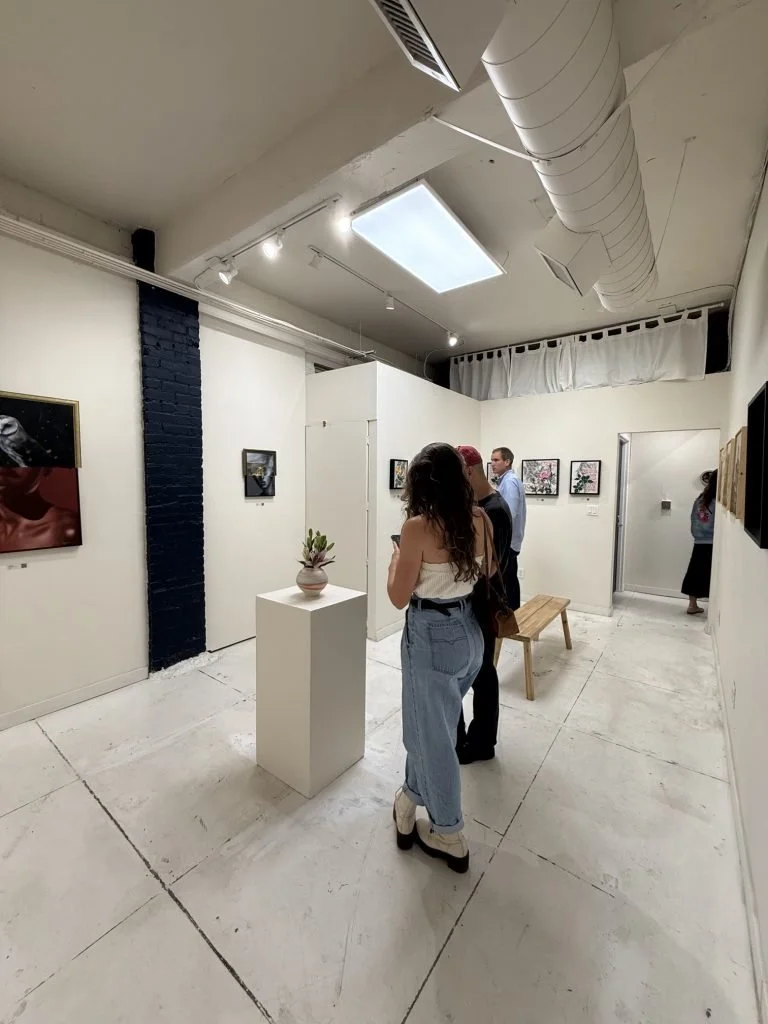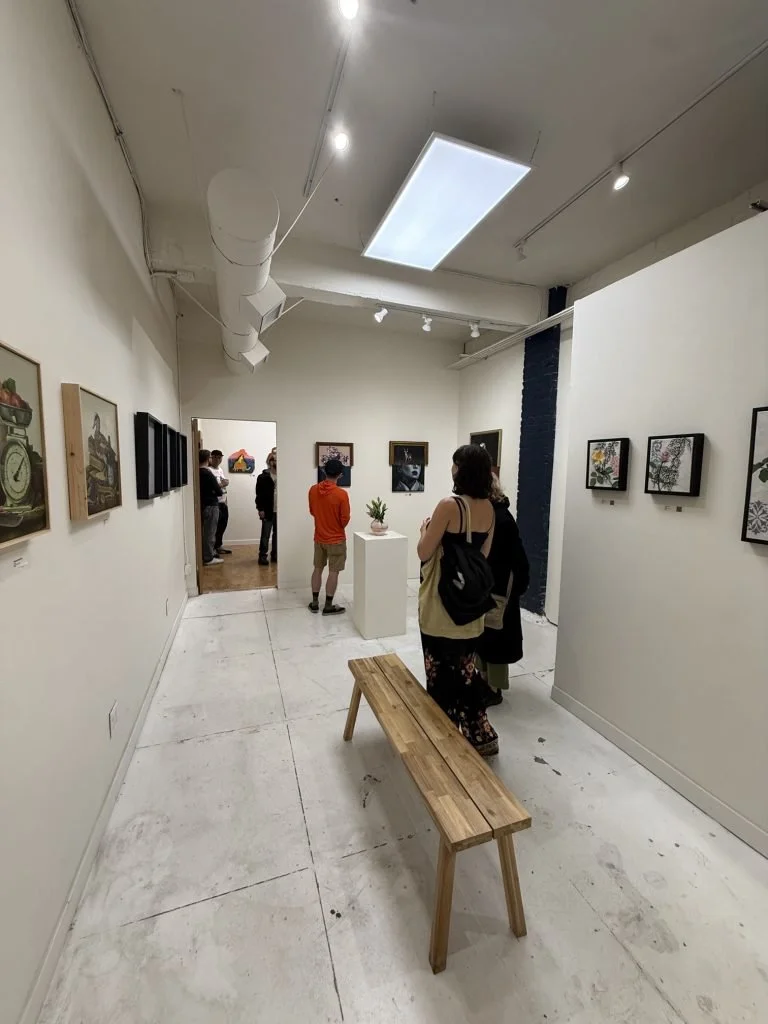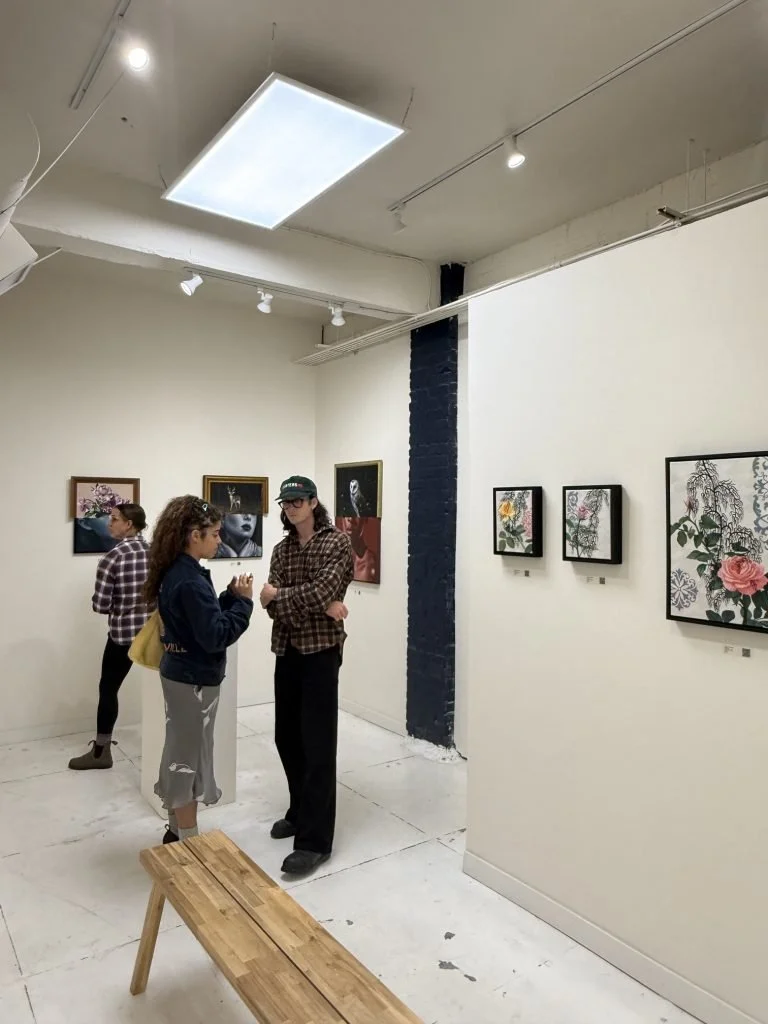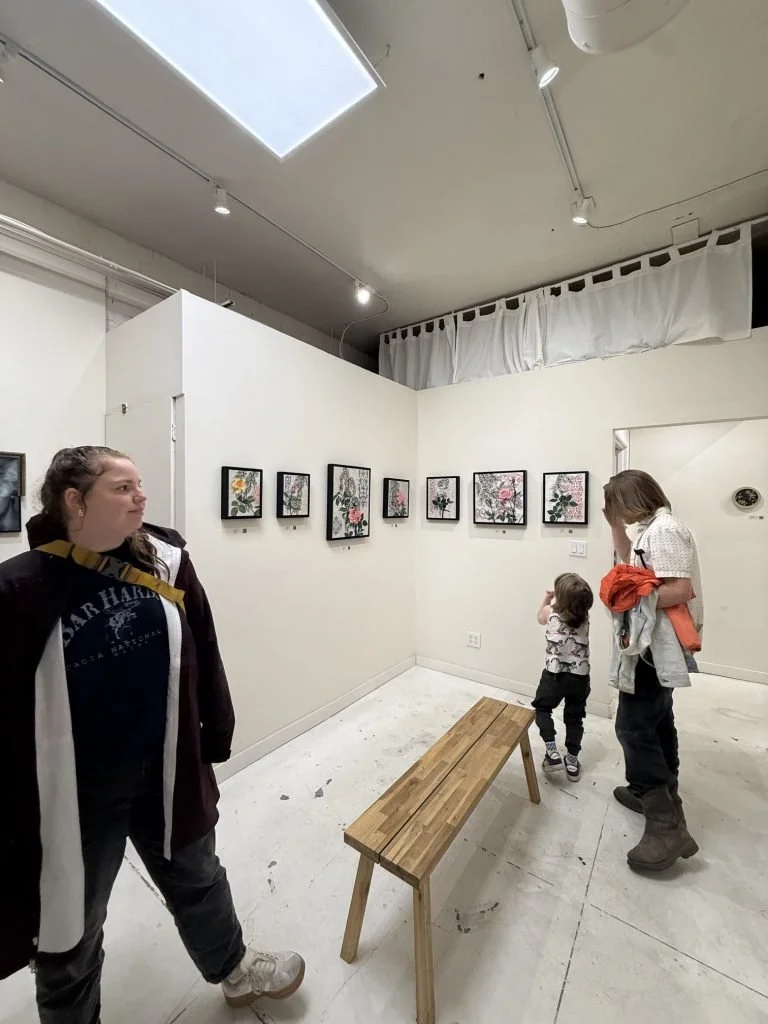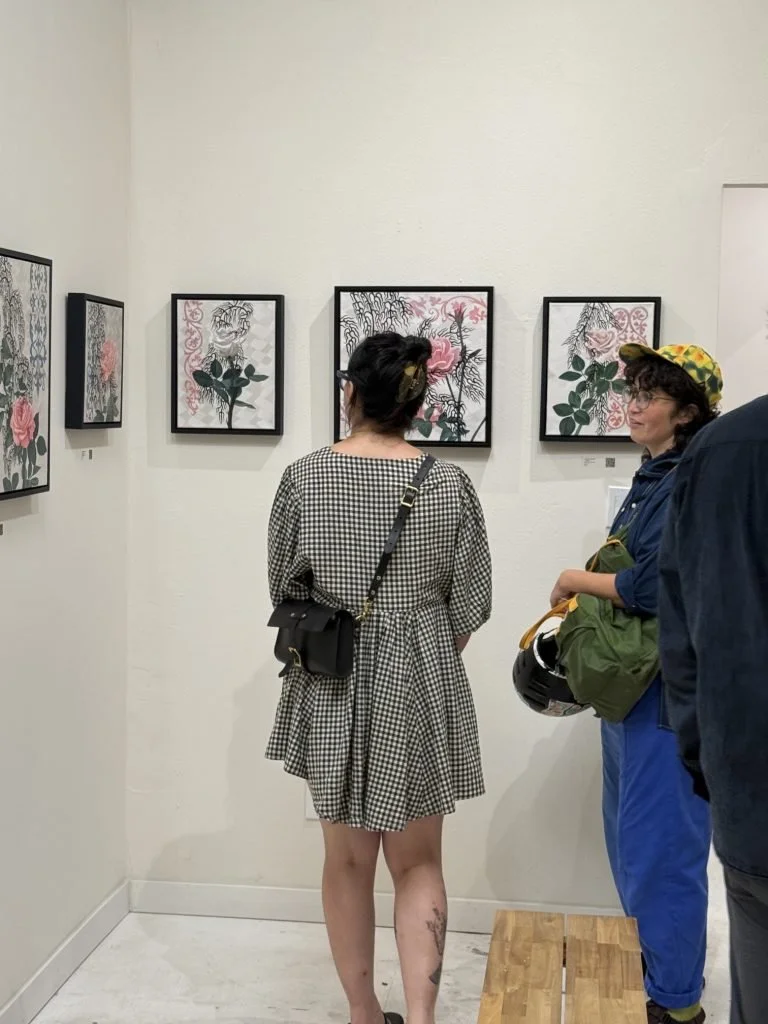
ROSE GARDEN
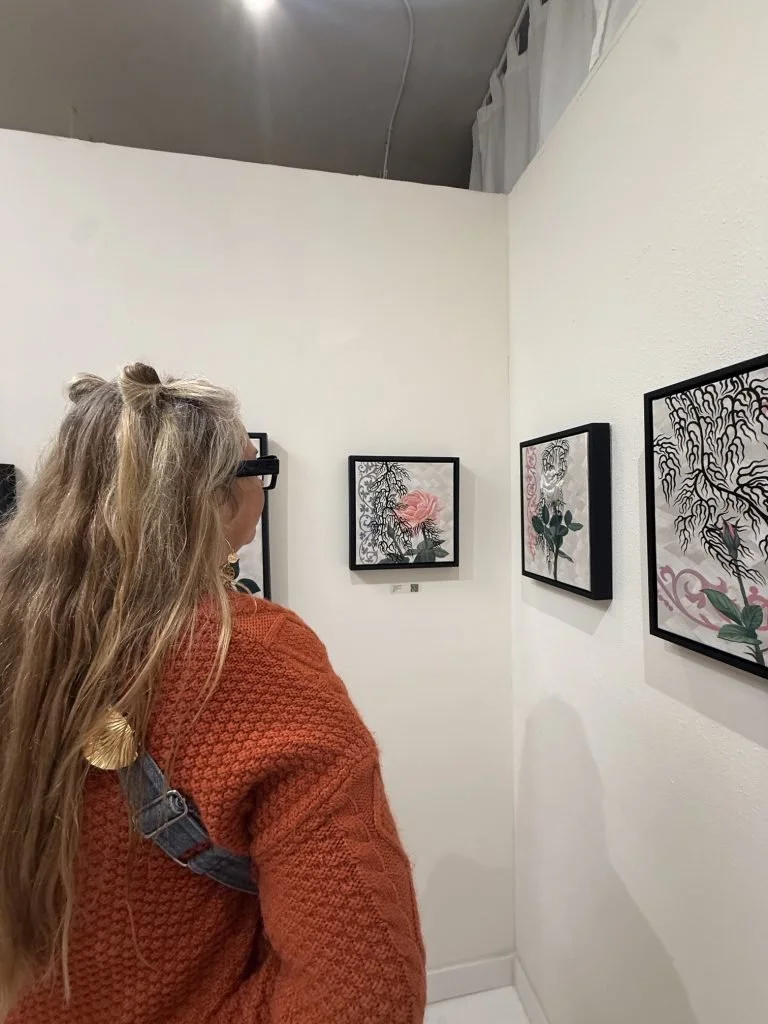
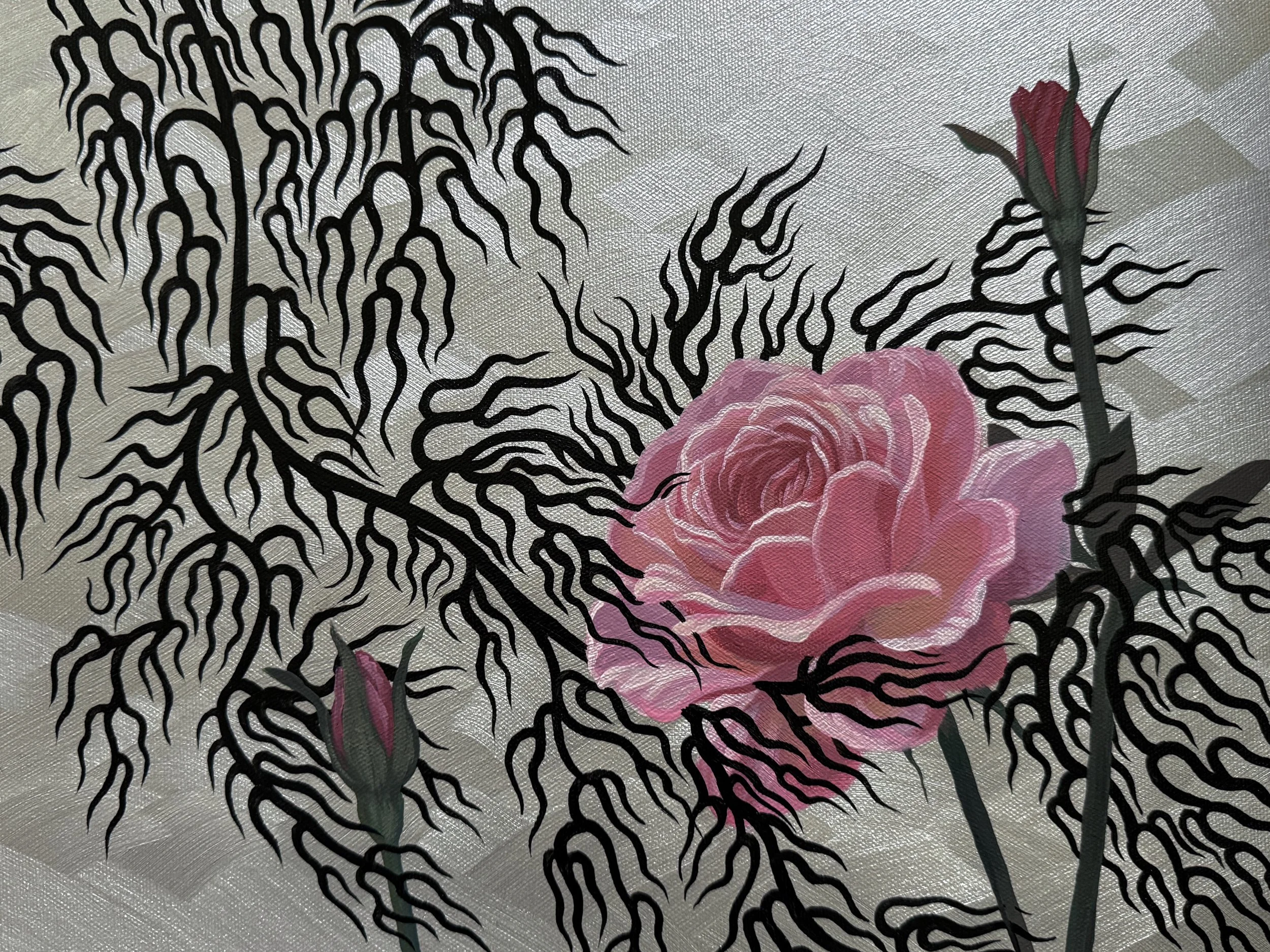
Paintings depict roses overtaken by poisonous roots…
… descending from above, their forms resembling flames as they wrap around and begin to consume the flower. What should nourish and protect instead arrives as a threat. The danger does not come from the ground up, but from overhead, from forces beyond the plant’s control.
The work is rooted in the anxiety I feel living under the current administration. Decisions made far away filter downward, shaping life in devastating ways. Like roots assaulting from above, that pressure settles onto the future.
Roses are often read as symbols of beauty and vulnerability. Here, they are placed beneath something ominous and inescapable. The flame-like roots suggest power that spreads without regard for what it destroys, transforming growth into domination. These paintings hold the moment when something once associated with groundness becomes threatening.
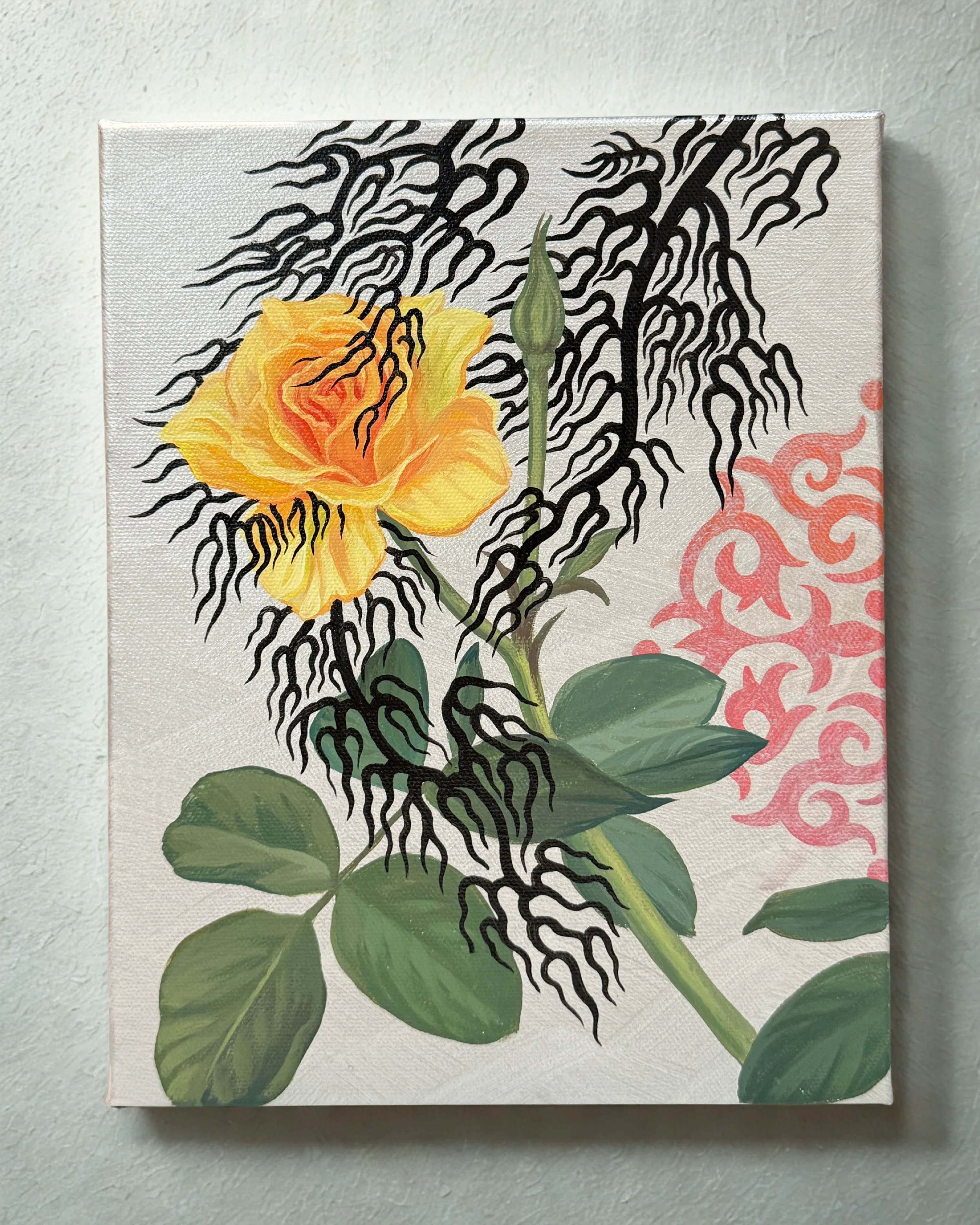
Annie, Acrylic on canvas, 8"x10", 2026
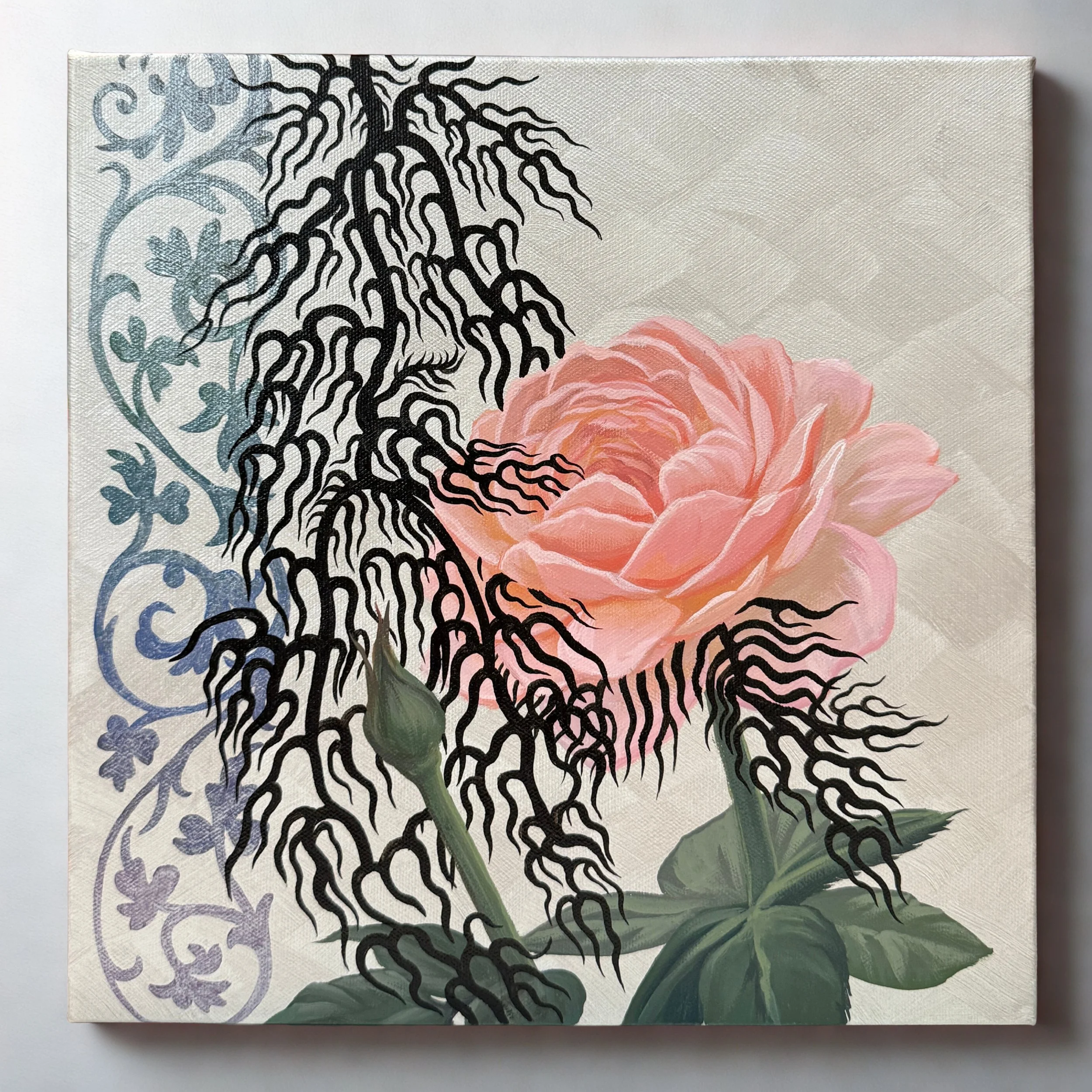
Chauntae, Acrylic on canvas, 12"x12", 2026
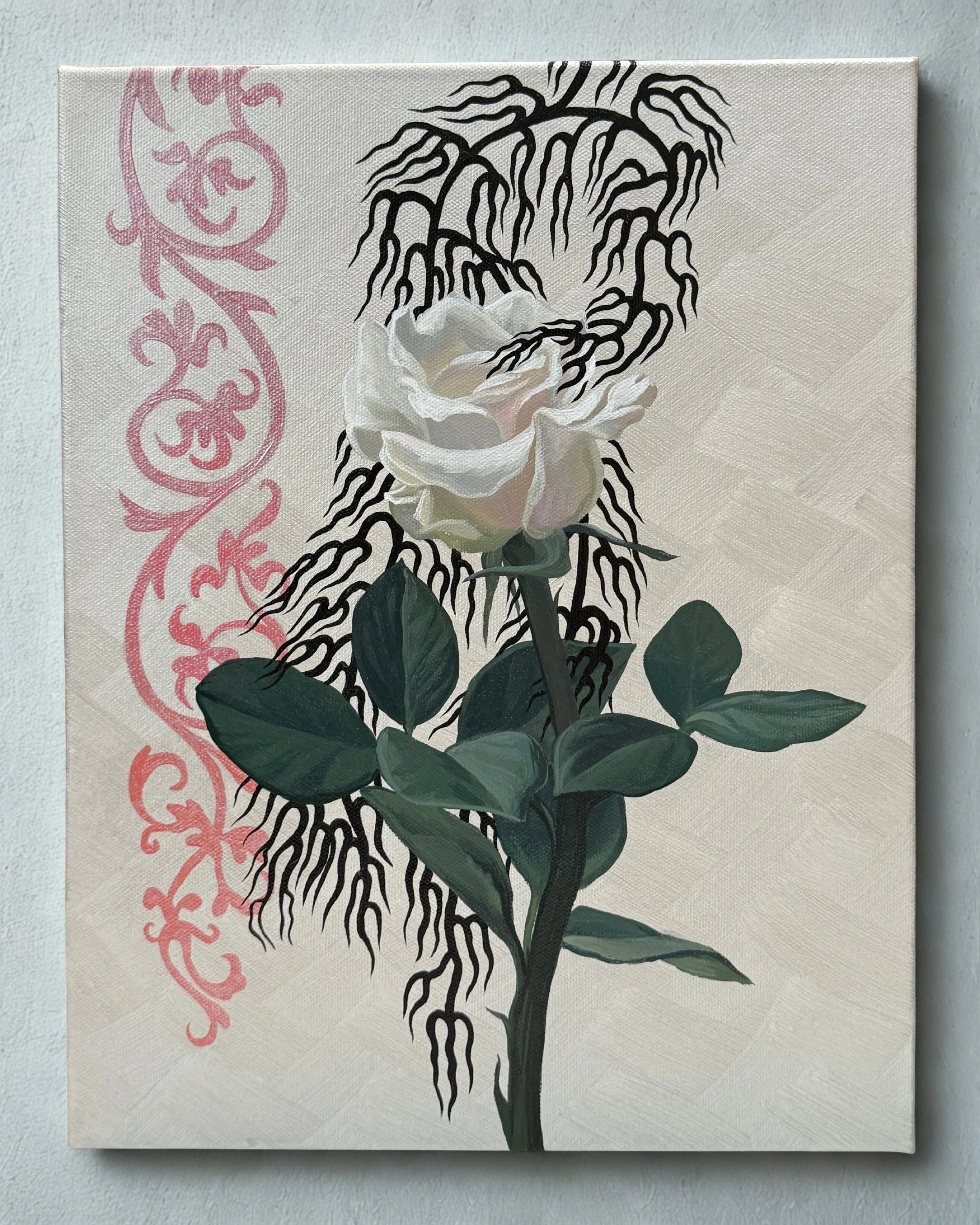
Virginia, Acrylic on canvas, 11"x14", 2026
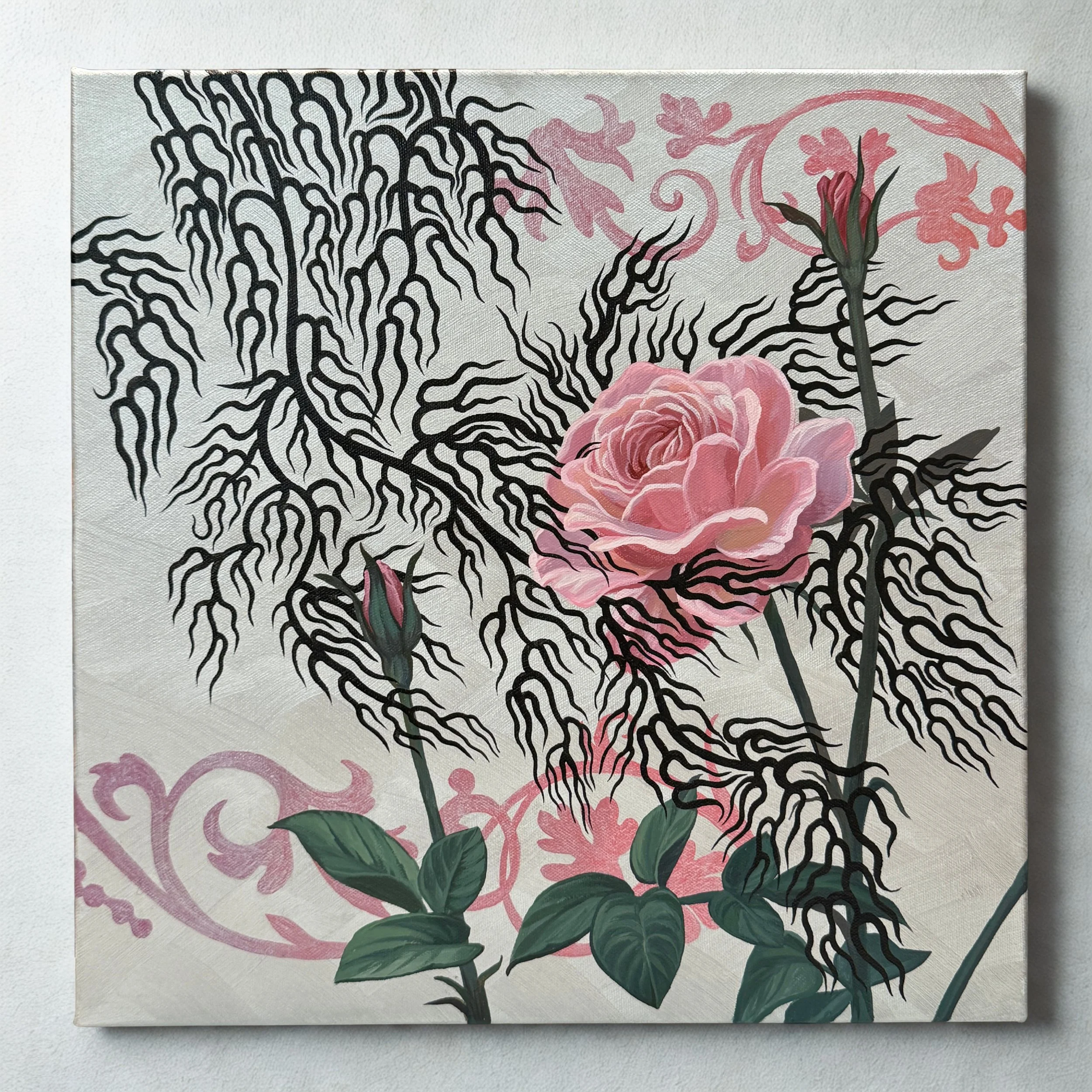
Jena-Lisa, Acrylic on canvas, 16"x16", 2026
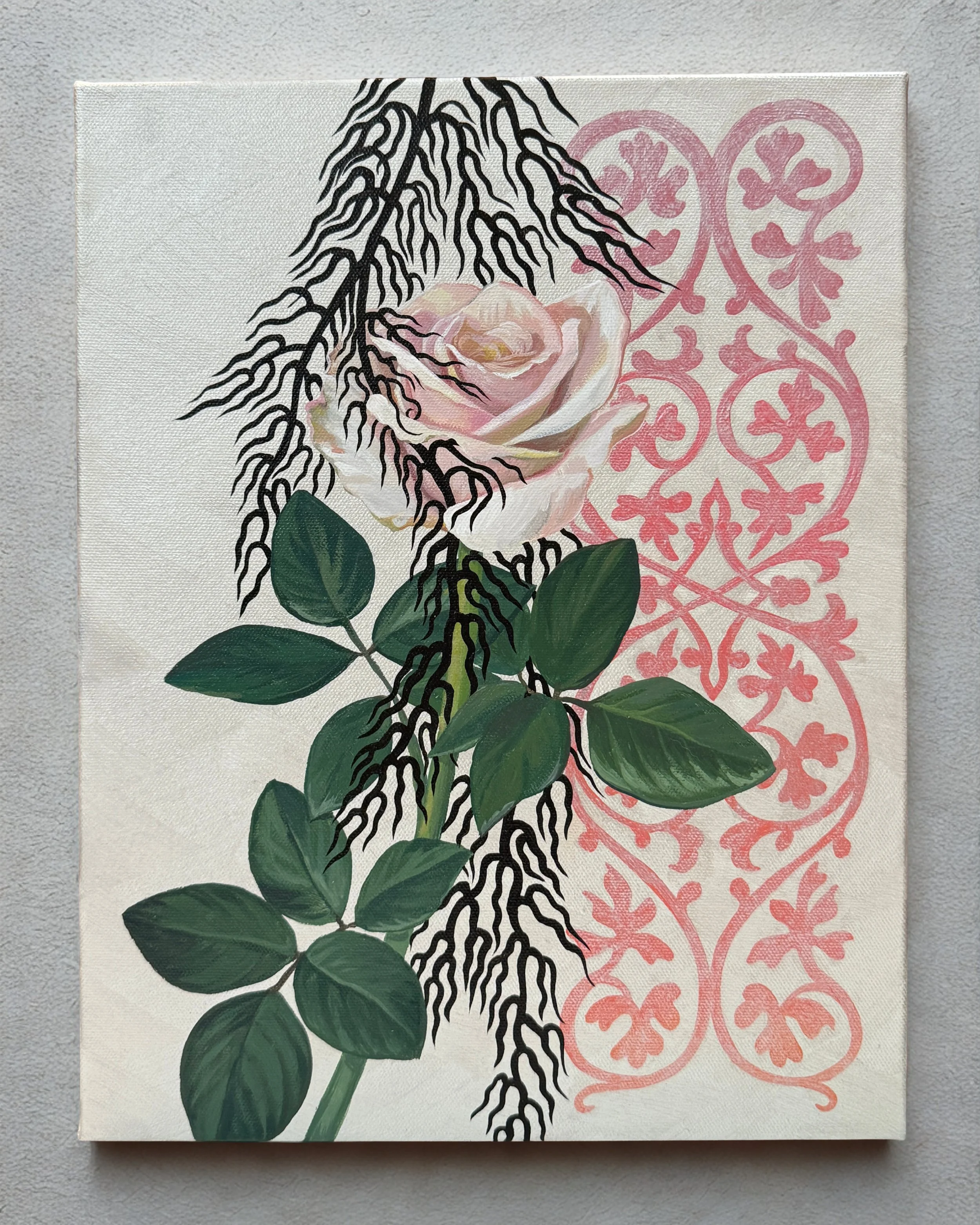
Jennifer, Acrylic on canvas, 11"x14", 2026
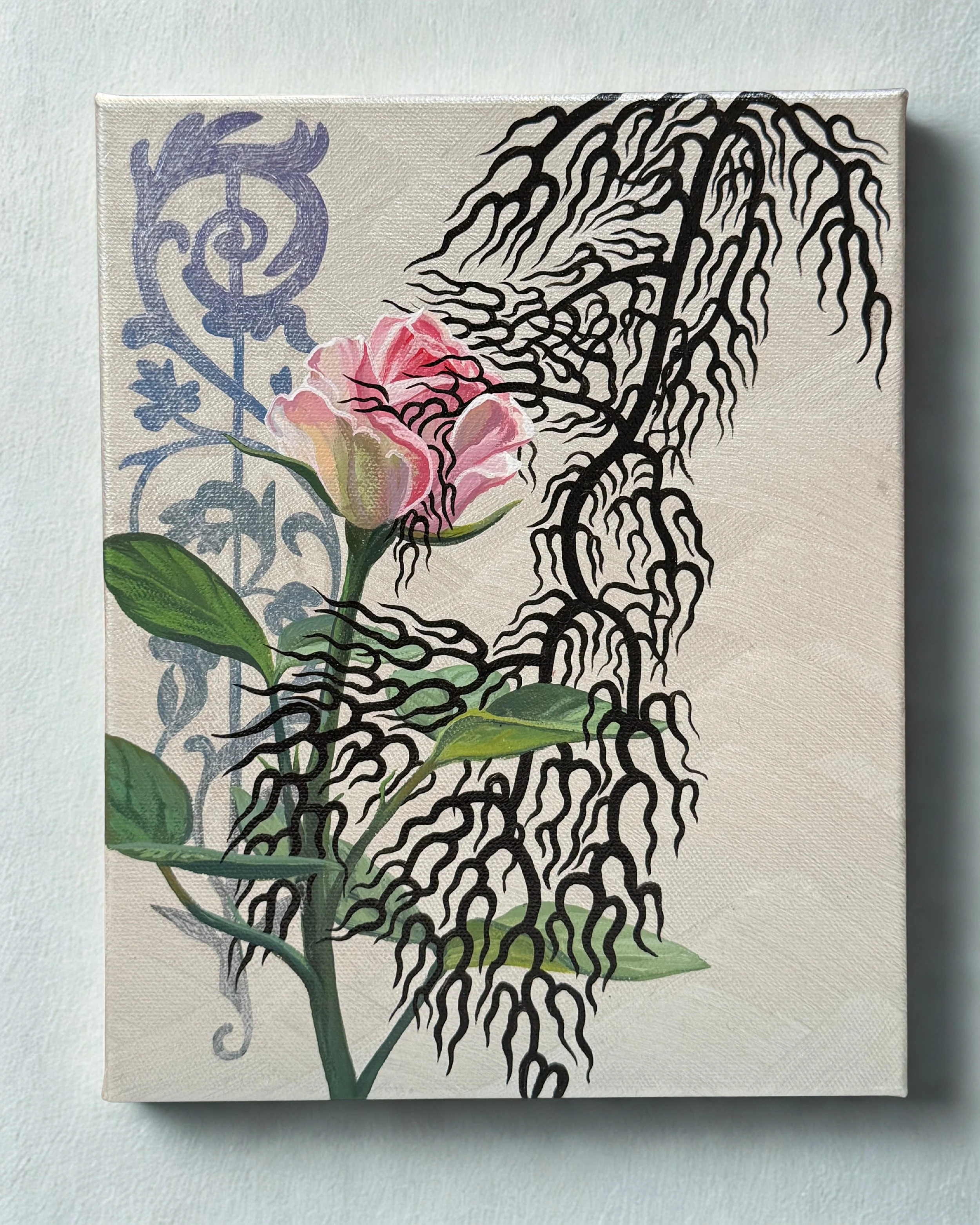
Maria, Acrylic on canvas, 8"x10", 2026
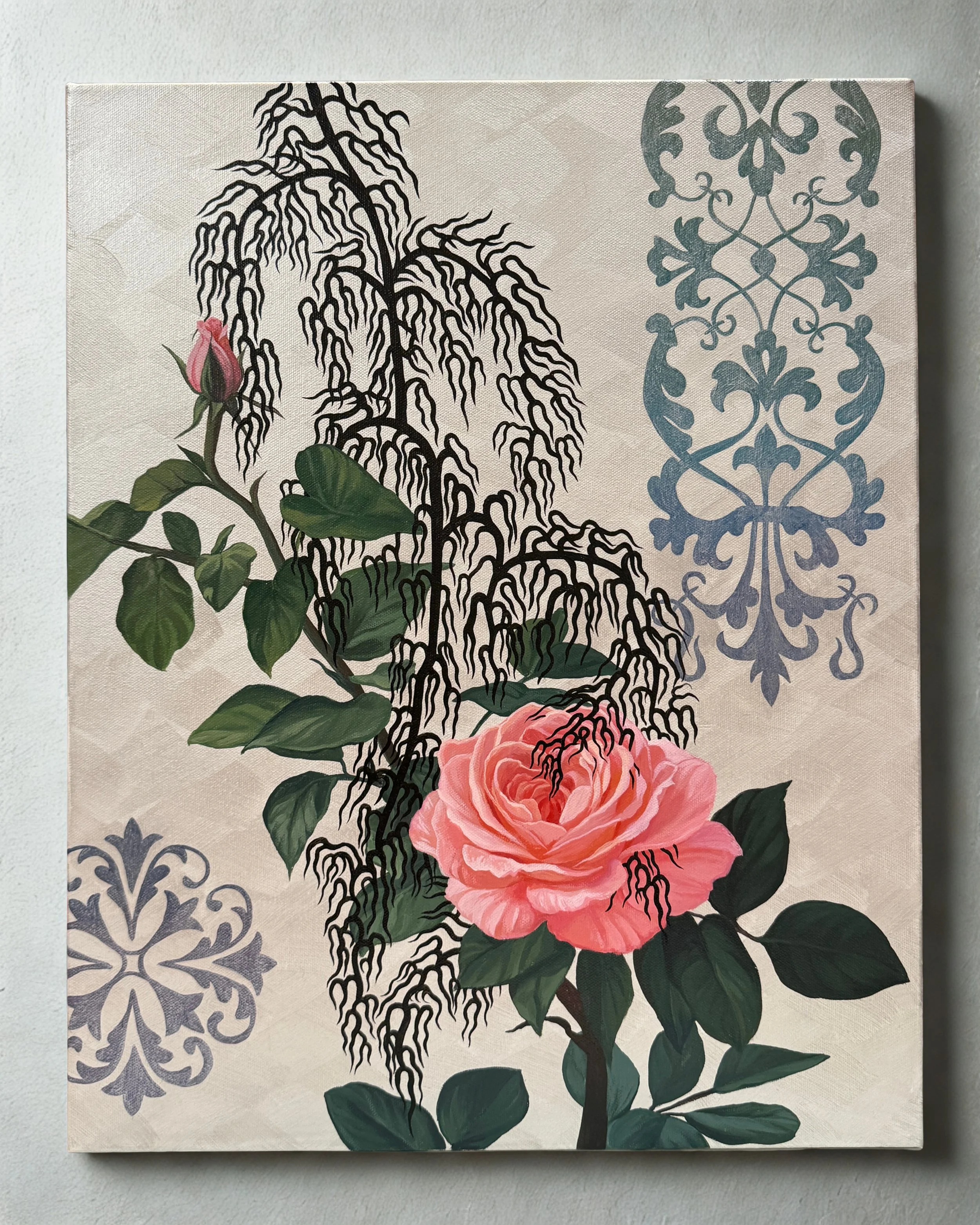
Johanna, Acrylic on canvas, 16"x20", 2026
ABSTRACT
𝕽𝖔𝖘𝖊 𝕲𝖆𝖗𝖉𝖊𝖓 is a series about power being used to suffocate the innocent and what anxiety looks like when those in authority abandon the people they are supposed to serve.
The paintings depict roses overtaken by threatening black roots descending from above. Their forms resemble both roots and flames as they wrap around and constrict the flower. The roses are symbols of ordinary people, while the grim reaper-like roots represent institutions, policies, rhetoric, and systems of power that claim to offer protection while instead inflicting harm. Unlike natural roots that nourish and sustain life, these roots descend from above, emphasizing the unnatural imbalance of power and the weight of forces imposed upon those below.
Created during a period of escalating attacks on human rights, bodily autonomy, public education, social support systems, and countless other protections people depend upon, these works emerge from a scary sense of unease. They reflect the anxiety of witnessing suffering unfold in real time while those responsible remain insulated from the consequences of their decisions.
The black roots spread slowly across the surface, obscuring petals and reducing once-vibrant forms to fragments of themselves. Their movement mirrors the way harmful systems operate, not always through sudden violence, but through gradual discriminatory systems, neglect, and a lack of care. The threat shows up through legislation, rhetoric, bureaucracy, and the normalization of suffering. The roots become visual manifestations of anxiety itself: invasive and impossible to ignore.
For much of my career, my work has relied on bold, obvious symbolism, dramatic colors, and direct confrontations with real-world issues. For these works, I struggled because they felt unusually restrained. They lacked the visual aggression I often use when addressing subjects like war, reproductive rights, environmental destruction, and human loss. I left them in the studio, feeling as though something was missing. In 2026, I realized the quietness in these works could be the point of the work. When we mourn, we usually hold a period of silence to honor the loved ones we've lost. These paintings are a moment of silence. They are acts of mourning. They acknowledge the people already harmed and the losses that have become so common that they are now being overlooked. Rose Garden is about identifying the source of harm, recognizing that these wounds do not occur naturally, and rejecting the narratives that attempt to normalize them. The series asks viewers to consider who is suffering and why that suffering exists.